News ·
How our prints are made
Giclée, edition numbers, A/P and what the pencil marks in the margin actually mean — a short guide to buying a limited-edition print.
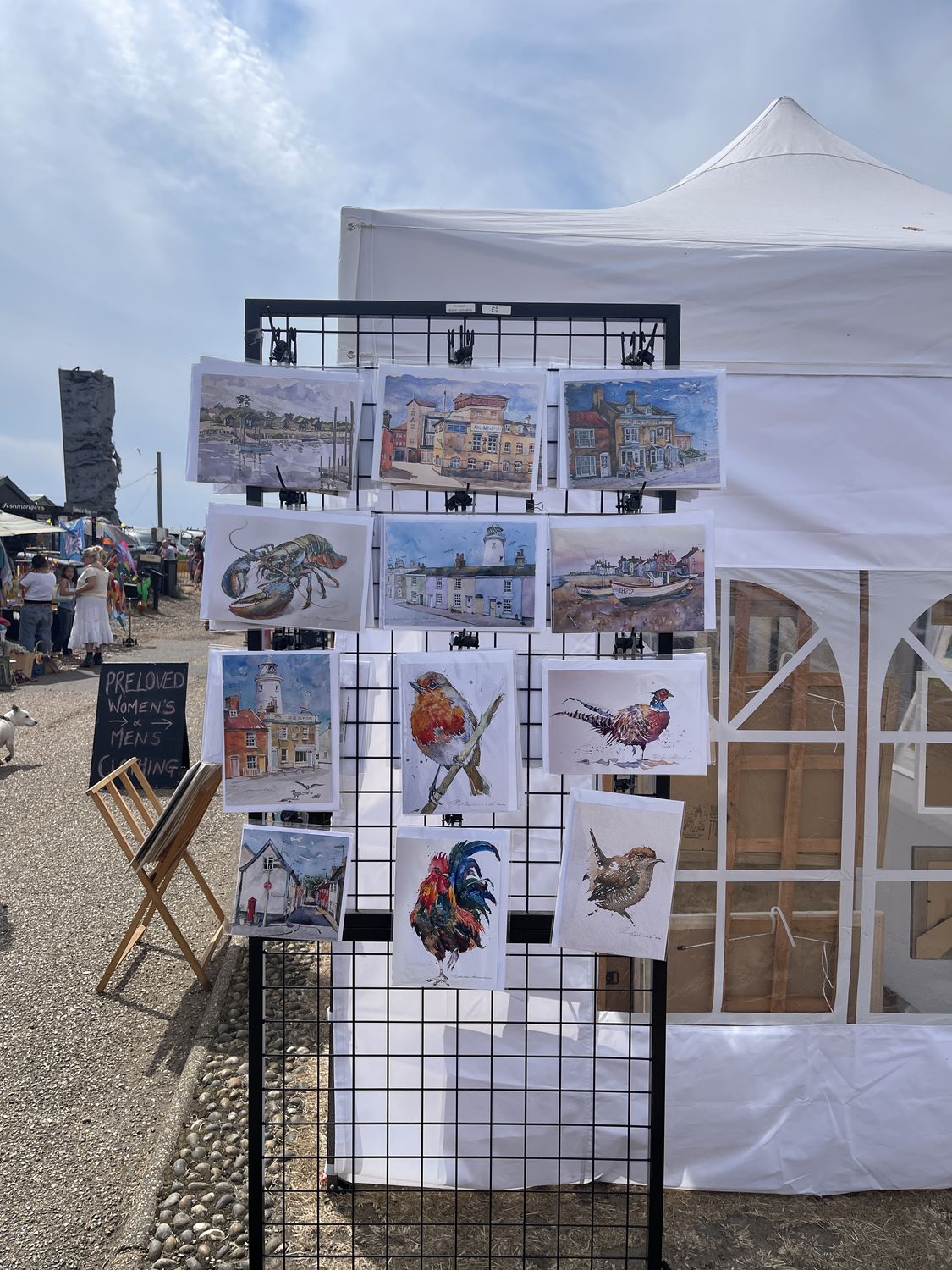
The phrase "limited-edition print" covers a multitude of sins, from a hand-pulled etching to a poster with a number scrawled on it. So here, plainly, is what you get when you buy one from this studio.
The print
Each print is a giclée, made in our own studio from a high-resolution scan of the original painting and printed with archival pigment inks on 260 gsm matt fine-art paper. Kept out of direct sunlight, it will hold its colour for decades. The prints are produced, checked, signed, mounted or framed and packed in the studio, not outsourced to a factory somewhere you will never see.
The edition
Every design is issued in a fixed edition. When it sells out, it is gone. In the bottom margin you will find three pencil marks, following the long-established convention:
Bottom left — the edition number, e.g. 4/50: this is the fourth print of fifty.
Bottom centre — the title (sometimes).
Bottom right — the artist's signature and the year.
Pencil is used deliberately: it is archival, it cannot be convincingly reproduced by a printer, and it looks right. You may occasionally see A/P (artist's proof) in place of a number — a small number of extra prints kept outside the main edition, traditionally around a tenth of the run.
The paperwork
Each print comes with a certificate of authenticity, and framed pieces carry a label on the back recording the title, edition and medium. It is the sort of thing that matters very little on the day you buy it, and a great deal thirty years later.
Browse the current editions.
Enjoyed this?
Get the next letter from the studio by email.