News ·
Crackle, paste and patience
Inside the mixed-media landscapes: why some of Nata Mo's paintings are deliberately made to crack.
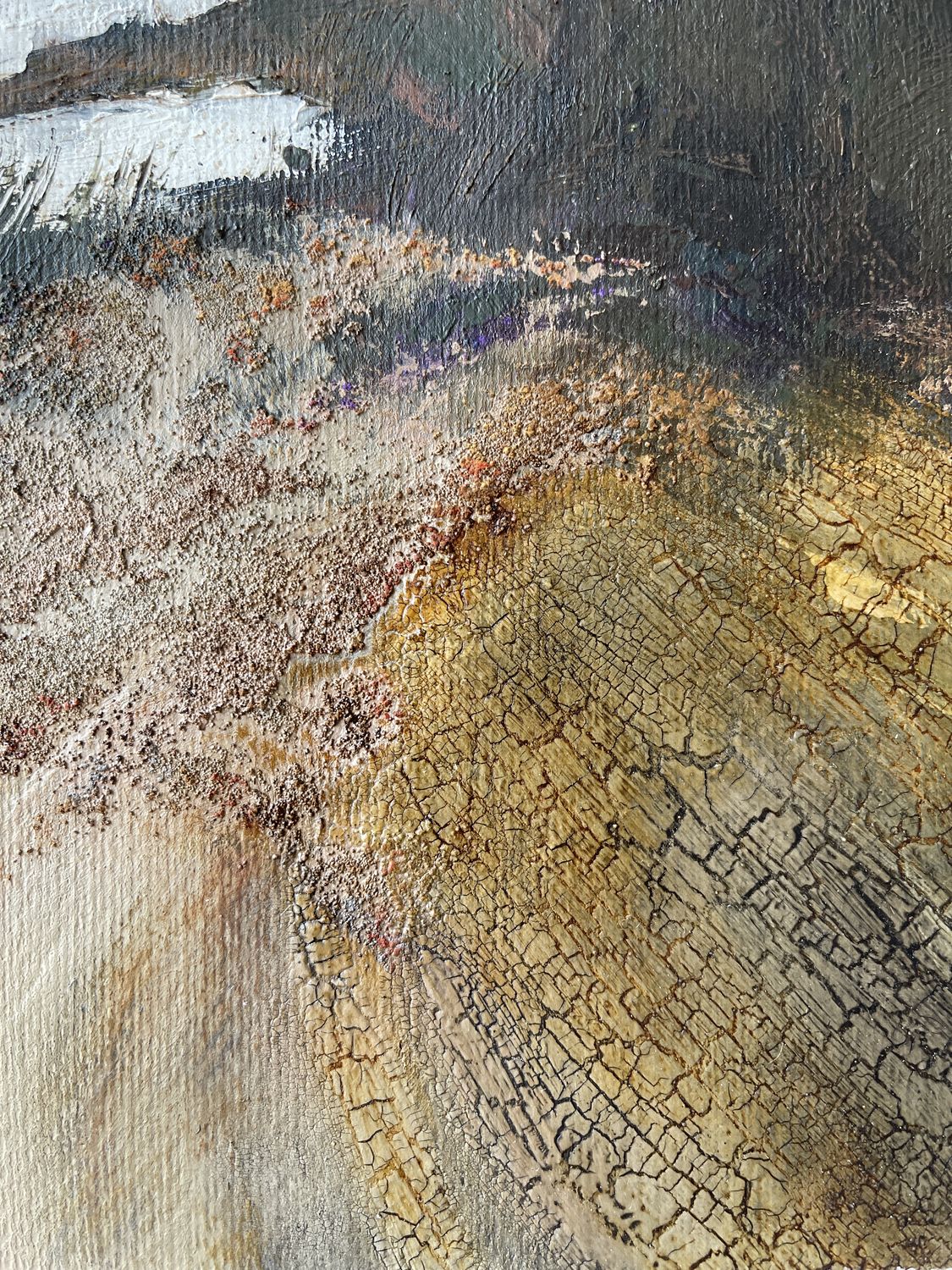
Most painters spend a good deal of effort preventing their work from cracking. Nata Mo, in her mixed-media landscapes, actively encourages it.
The process starts with structure. Layers of acrylic and structural paste are built up on heavy paper or board, scraped back, built up again. A crackle medium goes on next, and as it dries it splits into a fine web of fissures — like dried estuary mud, or the glaze on an old dish. Colour is then worked into, over and through those cracks, so the paint settles in the valleys and catches on the ridges.
Why bother?
Because the subject demands it. The landscapes of the eastern coast are not pretty in the chocolate-box sense; they are made by weather. Marsh, shingle and dune are constantly being eroded, washed over and rebuilt. A surface that has been allowed to break and weather is simply truer to that than a smooth one.
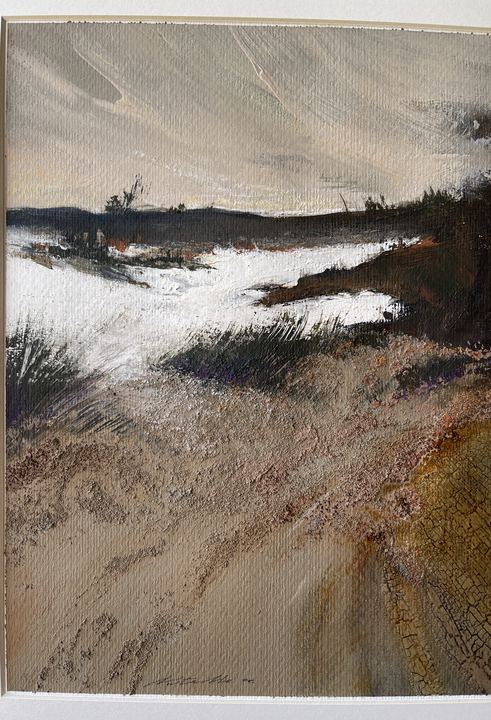
It also changes how you look. From across a room, The Weight of Light reads as pure atmosphere — a slate sky pressing down on a pale strip of sand. Walk closer and it dissolves into texture: grit, fissure, a scratch of white. Good landscape painting has always done this double act; texture just makes it more physical.
Where this is heading
This series is the work Nata is preparing for open-call exhibitions and for solo proposals to regional galleries in 2027, alongside a small group of larger canvases in oil and acrylic that take on rather bigger themes. Several of the current pieces are available now; the mailing list will hear first when new ones leave the studio.
Enjoyed this?
Get the next letter from the studio by email.