News ·
Why watercolour came first
A box of paints, a pad of paper and a new coastline: how a medium chosen out of necessity became the most popular work in the studio.
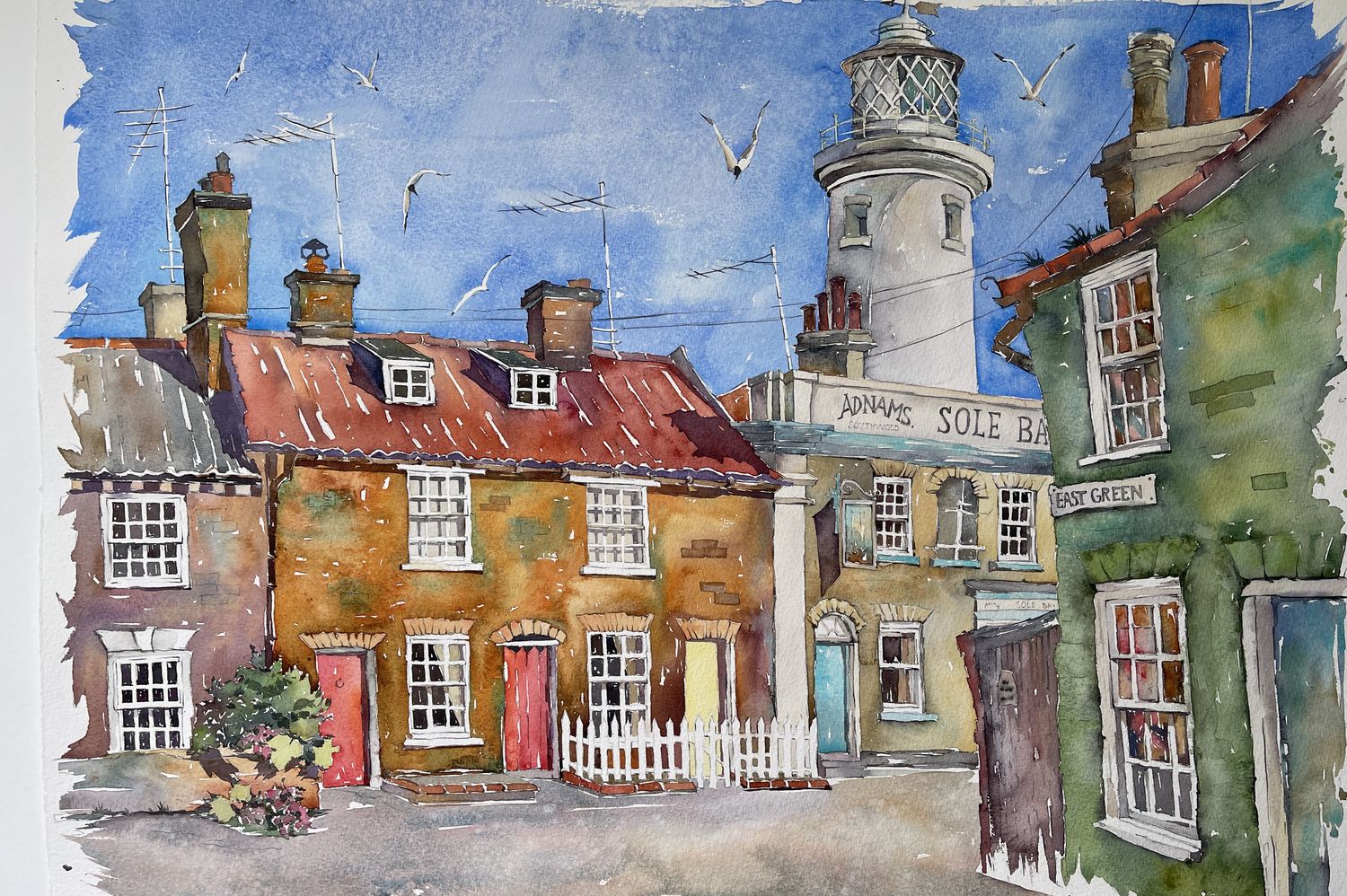
There is a romantic version of this story in which a painter arrives on the English coast, sees the light and reaches instinctively for watercolour. The true version is better, because it is honest. In May 2022, after leaving her home on the outskirts of Kyiv, Nata Mo arrived in England with very little. Canvas, oils and the bulky paraphernalia of a professional studio were out of the question. A box of watercolours and a pad of good paper were not.
So she painted what was in front of her: the leaning terraces, the pubs with their swinging signs, the lighthouse that appears at the end of streets where you least expect it. And people stopped to look.
Constraint, as any art teacher will tell you with irritating smugness, is good for the imagination. It turns out to be good for sales, too.
The look of it
The coastal paintings share a recognisable grammar: a loose, slightly wayward ink line that gives the buildings their character (and their wonky chimneys), and washes of watercolour that are allowed to bloom and granulate rather than being tidied into submission. Skies are big and busy with gulls. Nothing is quite straight, which is precisely why it looks right.
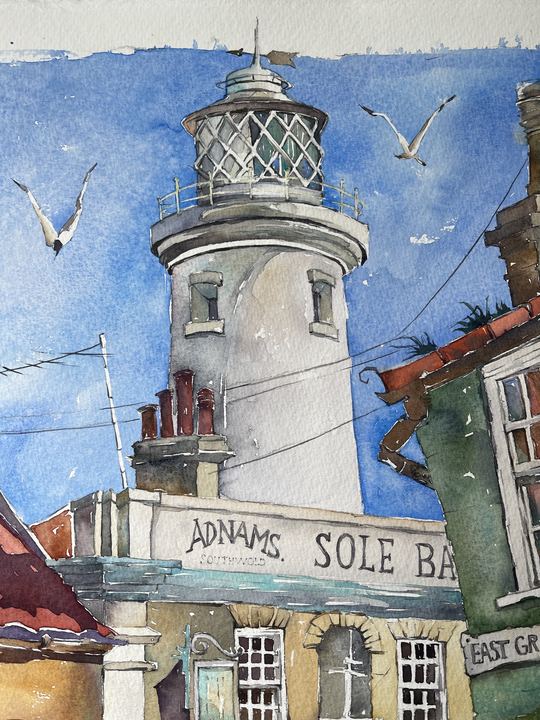
Visitors wanted to take a piece of the place home, and not everyone wanted (or had room for) an original. That is how the print editions began: careful giclée reproductions on heavyweight archival paper, signed and numbered by hand. They remain the studio's bestsellers, on Etsy and on market stalls across the region.
What came next
Watercolour opened the door. It did not close the others. A year ago Nata returned to oil, acrylic and texture — and that, as they say, is another post.
Enjoyed this?
Get the next letter from the studio by email.